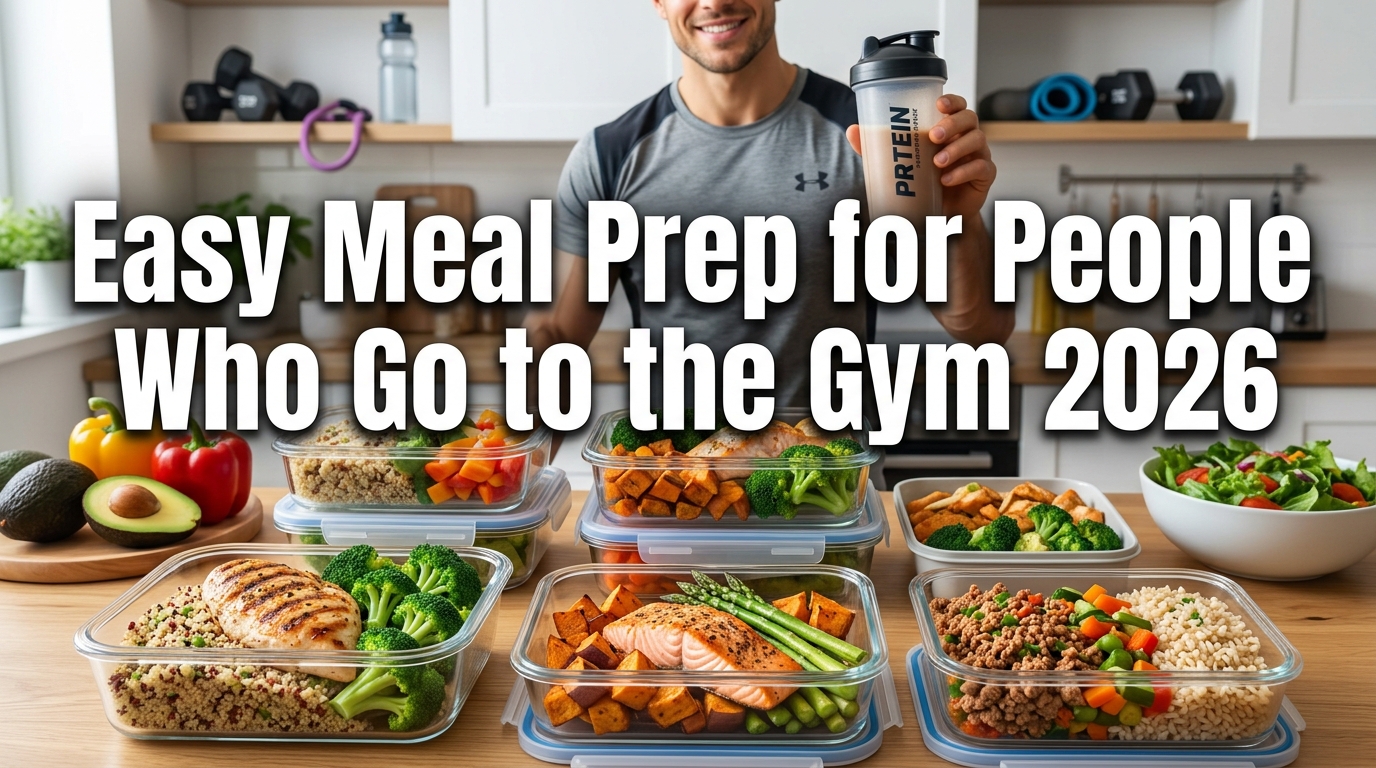

Easy Meal Prep for People Who Go to the Gym
On Tuesday afternoon, I was stuck on my lunch. It was supposed to be chicken and broccoli, grilled. Rather, it appeared to be a science experiment gone awry. The chicken was rubbery and the broccoli was a sad gray mush. We’ve all been in that situation. You assume the role of the person who begins your week with a ton of enthusiasm, who works out all the recipes on Sunday and by Wednesday hasn’t been able to stand another Tupperware container!
Meal prepping is the key to any fitness enthusiast’s success, but many people get it wrong. They tend to overlook the details of preparing a big recipe and lose interest. Or they prepare all their food once, and then eat it as if it were left out all day Tuesday and into Monday.
Let’s fix that. Here’s how to prepped food that won’t only help you make gains, but also save your wallet and make it to Friday.
The Mix And Match Strategy
Don’t worry about recipes for a specific dish. Think in components. When you make a large batch of “Chicken Stir Fry” you have to eat it for a week. You can assemble various meals throughout the week if you prepare individual parts.
I have a basic solution of matrices.
- One protein.
- One carb.
- One vegetable.
- One fat source.
This makes it easy. On Monday, have a bowl of grilled chicken with brown rice and roasted asparagus, on Tuesday, have a wrap of grilled chicken with brown rice and roasted asparagus, and on Wednesday, have a salad with grilled chicken, brown rice and roasted asparagus. It tastes like another kind of food, but it’s only been prepared once.
The aim is to eat the right amount of macros without having to think about the content. The majority of people that go to the gym, that means that they are going to have to be eating high protein, moderate carbohydrates, and healthy fat.
Best Proteins That Reheat Well
Protein is an essential component of gym meal preparation. It is required for building muscle tissue. However, protein is the most difficult to reheat without losing its texture.
Chicken Breast
For good reason, it’s the classic. Low-cost and high protein. The secret is not to overcook it initially. Bake it at 375°F (190°C) until it hits 165°F (74°C) internally. The more, the more it will dry out during reheating.
Turkey Breast
May be lighter and more economical than chicken. Ground turkey comes to the rescue. It can be browned in a large skillet with taco seasoning or Italian herbs. It remains humid for several days.
Lean Ground Beef
Ideal for muscle growth. It’s fattier than chicken, making it juicy. When storing fat, drain it first to help control calories.
White Fish
Cod or tilapia is a quick-cooking fish. Very fragile, do not microwave for too long. Typically, it will take about 60 seconds. Use a toaster oven if you have one in the office. It is more crunchy than a microwave.
Eggs
Eggs will not scramble and can’t be frozen. Turns to rubber. However, hard-boiled eggs are perfect. Remove from the water after they cool and place them in water to prevent them from smelling in the refrigerator.
Smart Carbohydrates
Carbs are your energy source for exercise. If you work hard they are a must. Do not fear carbs. Simply select the most appropriate ones.
Brown Rice
Stores nicely in the refrigerator when compared to white rice. Does not clump or become mushy so quickly. Cook in large quantities using a rice cooker or Instant Pot. Freezes well if in excess.
Sweet Potatoes
Roast in their skins. They maintain their texture better than white potato. Also, the skin provides fiber.
Oats
Oats don’t need to be cooked in the morning. Make “overnight oats.” Toss raw oats, Greek yogurt/milk and chia seeds. Put them in a jar. In the morning, the oats become soft. Likes the flavor of muesli.
Quinoa
It’s a complete protein (it has all the amino acids). Has a nutty taste, which complements grilled chicken. Can become soft, place in container with paper towel to absorb moisture.
Vegetables That Won’t Get Soggy
This is the place where people get it wrong. Veggie problems contaminate the food.
The Best Keepers
- Bell peppers: They remain crisp.
- Carrots: They become sweeter as they age.
- Broccoli and Cauliflower: Lightly steam. Never cook them to death.
- Asparagus: Roast it in olive oil. It’s easy to reheat in an air fryer.
The Worst Keepers
- Do not pre-prepare Spinach and Lettuce. They lose turgidity and become slimy. Use a whole bag of healthy spinach and add to meal just before consumption.
- Zucchini: Emits a lot of water. If you have to pre-order, then cook it over the grill instead of steaming it.
Food Safety Rules You Cannot Ignore
Food poisoning is the quickest way to spoil a gain cycle. Storage requires a good mind.
USDA refers to the temperatures 40°F to 140°F (4°C to 60°C) as the “Danger Zone.” The growth of bacteria is rapid here.
Do not place a hot pan or pot of food in the refrigerator. It warms up the entire fridge and exposes other food to possible warming. Rather, portion hot food in shallow containers. Small pots cool quickly. After they have cooled down, the lids can be removed and the product put into the refrigerator.
The Four Day Rule
Cooked foods can be stored for 3–4 days in the refrigerator. Eat Sunday’s meals by Wednesday or Thursday if you cooked on Sunday. Use foods from the previous week if you did freeze them, for Thursday and Friday.
If you notice any mould or sense any unusual smell, discard it. Don’t taste to sample.
Tools You Actually Need
There’s no need to have a $300 set up. The fundamentals that are effective are needed.
Glass Vs. Plastic Containers
I used to use plastics. Since then I have been using glass and have never looked back. Tomato sauce will not stain glass. Does not retain odours. Can be stored in the oven, microwave and freezer.
If you bring your bag to the gym each day, plastic will be lighter. Just ensure that it is BPA free and microwave-safe.
| Feature | Glass Containers | Plastic Containers |
|---|---|---|
| Durability | Heavy, prone to breaking | Cracks over time |
| Staining | Resistant | Sensitive to staining |
| Heating | Oven & Microwave safe | Microwave safe only |
| Cost | Higher upfront cost | Easy and reasonably priced to replace |
A Food Scale
It is a guess and check game to estimate portions. Digital scales range in price around $15. It’s the most useful investment to follow your macros. Will discover how small a “serving” of peanut butter is.
A Good Knife
It takes a long time and is unsafe to cut chicken with a dull knife. It takes half as long when using a sharp knife for the chef.
Pre-Workout Vs. Post-Workout Fueling
Time of eating is as important as what food you eat.
Pre-Workout
Have this meal 1–2 hours prior to gym. Carbs are for energy. Low fat and low fibre here. Fat takes a long time to break down, and can cause lethargy when lifting.
Good ideas: Banana with almond butter, oatmeal with protein powder or toast with jam.
Post-Workout
There’s only about an hour after your workout that you can get the most out of it. Muscles are like sponges. They require protein as well as carbohydrates. It’s the time to indulge in the rice and chicken you prepared.
Don’t need to buy costly supplements. If you plan it correctly, a solid meal will do the trick as well as a protein shake.
Three Real World Meal Prep Scenarios
The Busy Professional
Work 9–5, train after work.
- Prepare: Mason Jar Salads for school lunch. Place dressing on bottom, then add hearty vegetables, proteins, and then add greens. Shake in a bowl to serve.
- Dinner: Chilli or stew pre-portioned. Improves flavor after several days refrigeration.
The Student On A Budget
Money is tight. Chicken breast and rice go together like peanut butter and jelly. Buy frozen vegetables. They are less expensive than fresh, and just as loaded with nutrition as fresh since they are flash frozen at optimum ripeness.
- Prep: Large trays of baked chicken and roasted veggies. Mix up spices for a spice rotation. Switch from taco seasoning to Italian herbs every week.
The Muscle Builder
You need volume. You need calories.
- To prepare: Incorporate fats that are high in calories. Add olive oil to your veggies after they cook. Put avocado on top of your burgers. Portion bags to snack on. If you are bulking don’t use low calorie volume foods.
Flavor Hacks To Avoid Boredom
Spice blends are your bombass bombshell. Ten pounds of plain chicken breast is enough allow for one meal, but if you divide it into three separate portions, add a different seasoning to each, you’ll feel like you’re eating three meals.
- Batch 1: Taco seasoning (Cumin, chili powder, paprika).
- Batch 2: Italian seasoning (Oregano, basil, garlic powder).
- Batch 3: Curry powder (Turmeric, cumin, coriander).
Sauces are great to add some zest, but not pour over before storing the food. They make rice soggy and veggies wilt. Store in a separate small saucepan, and pour directly over food as needed.
Final Thoughts
Preparing meals is an ability. There will be a number of mistakes initially. You may overcook or undercook your food. One or more spices may be missed. That is okay.
Start small. Don’t aim to cook breakfast, lunch and dinner all in one day. Pick one meal. Master that. After that, try to incorporate another habit.
Consistency beats intensity. A good plan followed for a week is better than a great plan followed for a week, x 52.
Frequently Asked Questions
How Long Does Meal Prep Last In The Fridge?
Cooked foods can be kept for 3–4 days. Freeze after cooking for longer duration than Thursday. Refrigerate overnight prior to eating.
Can You Meal Prep Eggs?
Eggs can be cooked very easily in the fridge. Don’t take the shell away until you eat it, or they dry out. Avoid chopping up scrambled eggs or omelets ahead of time. They turn rubbery and give off a foul odor of sulfur, causing the entire refrigerator to smell foul.
Is It Cheaper To Meal Prep For The Gym?
Yes. Ingredients are much cheaper to purchase than individual meals. The average price for a homemade meal is $2–$4. Similar healthful meal out typically costs $10–$15. It’s very easy to save more than $50 per week.
How Do You Keep Vegetables From Getting Soggy?
Don’t overcook them for the first time. Cook them until they are just firm, or “al dente.” Keep them away from the sauce/dressing. When eating salad, dress with sauce if you have one, and add it to the salad just before eating.
What Is The Best Container For Meal Prep?
It is best to use glass containers overall. They do not contain any chemicals that are harmful when exposed to the microwave, oven or freezer. Do not retain odors or stains from sauces. While plastic works for cold foods and short-term storage, glass will last longer and will be better for you.
Do I Need To Count Macros?
Not strictly. A few simple steps will help you make a big difference, such as having protein at every meal and half of your plate full of vegetables. But if you want to achieve a certain target, such as a bodybuilding competition or a weight level in a sport, macros will help you do so.
Can I Reheat Rice Safely?
Yes, but you have to be careful. Rice is a food that can harbor cooking-resistant bacteria. Cool rice quickly in an hour after cooking and refrigerate. It should be steaming hot throughout when it is reheated. Never reheat rice more than once.