
Figuring out how to build a simple workout routine for beginners at home usually feels intimidating when fitness influencers push sixty-minute brutal circuits. You do not need expensive machines or complex movements that leave you crawling to the kitchen. Starting small creates real consistency without draining your energy. A sustainable living room plan fits real life, builds real strength, and keeps exercise fun instead of miserable.
Clear Your Floor Space and Set Honest Expectations
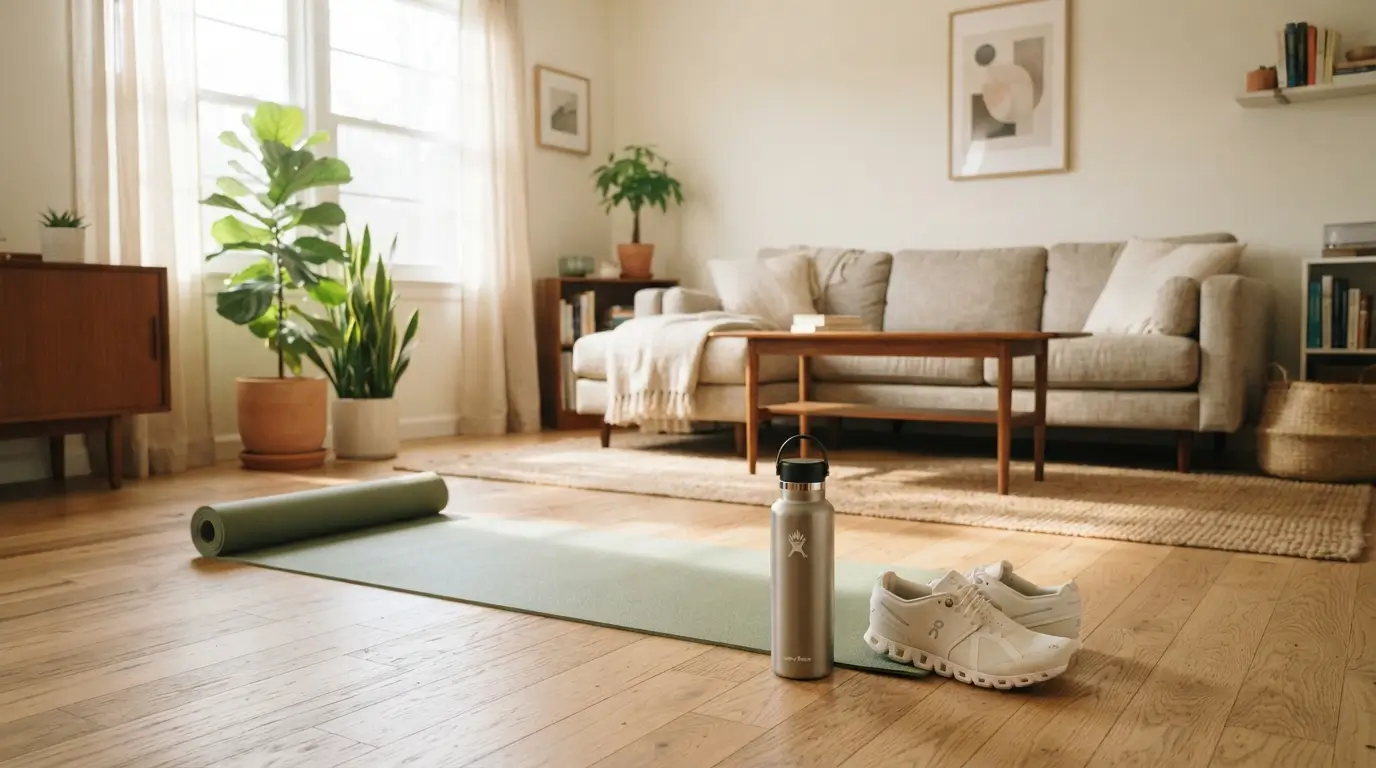
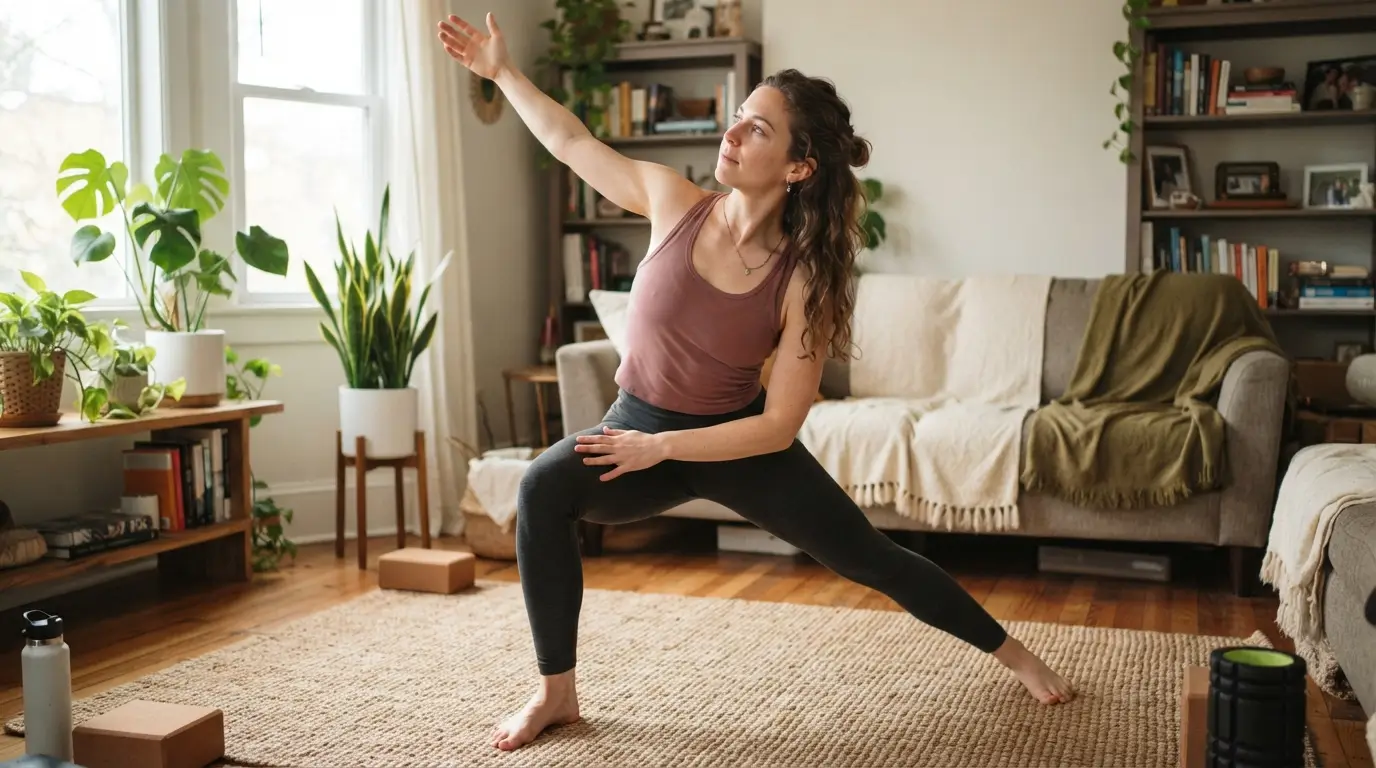
Setting up your training environment requires far less effort than most people imagine. You do not need a dedicated garage gym or expensive iron weights to make noticeable progress. Clear a rectangular space roughly the length of your body on a carpet or roll out a basic Manduka yoga mat in your living room. Push the coffee table aside so your arms and legs do not bang into sharp wooden corners during lunges or lateral reaches.
Also Read; Best Full Body Workout Routines for Beginners at Home 2026
Working out barefoot or in flat socks on carpet can cause slipping, so lace up a supportive pair of sneakers to protect your ankles. Keep a filled water bottle nearby so you do not wander into the kitchen mid-circuit and get distracted by chores or snacks.
Realistic expectations keep you from quitting before your new habit sticks. Most beginners fail because they commit to six intense workouts a week, wake up brutally sore on Wednesday, and drop everything by Friday. Start with two or three twenty-minute sessions each week. Giving your muscles time to adapt prevents joint irritation and builds a genuine routine that outlasts your initial burst of motivation.
Master the Five Fundamental Movement Patterns
Human bodies naturally perform five core movement patterns every single day, whether you are picking up heavy grocery bags or getting out of a low sofa. Building an effective routine means picking one beginner-friendly exercise for each pattern rather than collecting random, flashy movements from social media feeds.
Your routine should revolve around these basic movement categories:
- Squat pattern: Bodyweight box squats onto a standard dining chair to build quadricep, hip, and glute strength.
- Hinge pattern: Standing glute bridges or unweighted Romanian deadlifts focusing on the hips and hamstrings.
- Push pattern: Incline wall pushups or countertop pushups to train the chest, shoulders, and triceps safely.
- Pull pattern: Doorframe rows or towel rows that target the upper back muscles and improve daily posture.
- Core brace: Standard floor planks or deadbugs to stabilize the spine without crunching your neck.
Focusing on compound movements gives you the most muscle activation in the shortest amount of time. Compound exercises recruit multiple muscle groups at once, which burns more energy and builds balanced, functional strength. Practice each movement slowly, paying close attention to your balance and joint comfort before you ever consider adding resistance bands or free weights.
How to Build a Simple Workout Routine for Beginners at Home
Structuring your workout into a clean circuit keeps your heart rate elevated while saving precious time. When figuring out how to build a simple workout routine for beginners at home, the classic full-body circuit format beats isolated muscle splits every single time. You move through each of the five core exercises in sequence, rest for a minute, and repeat.
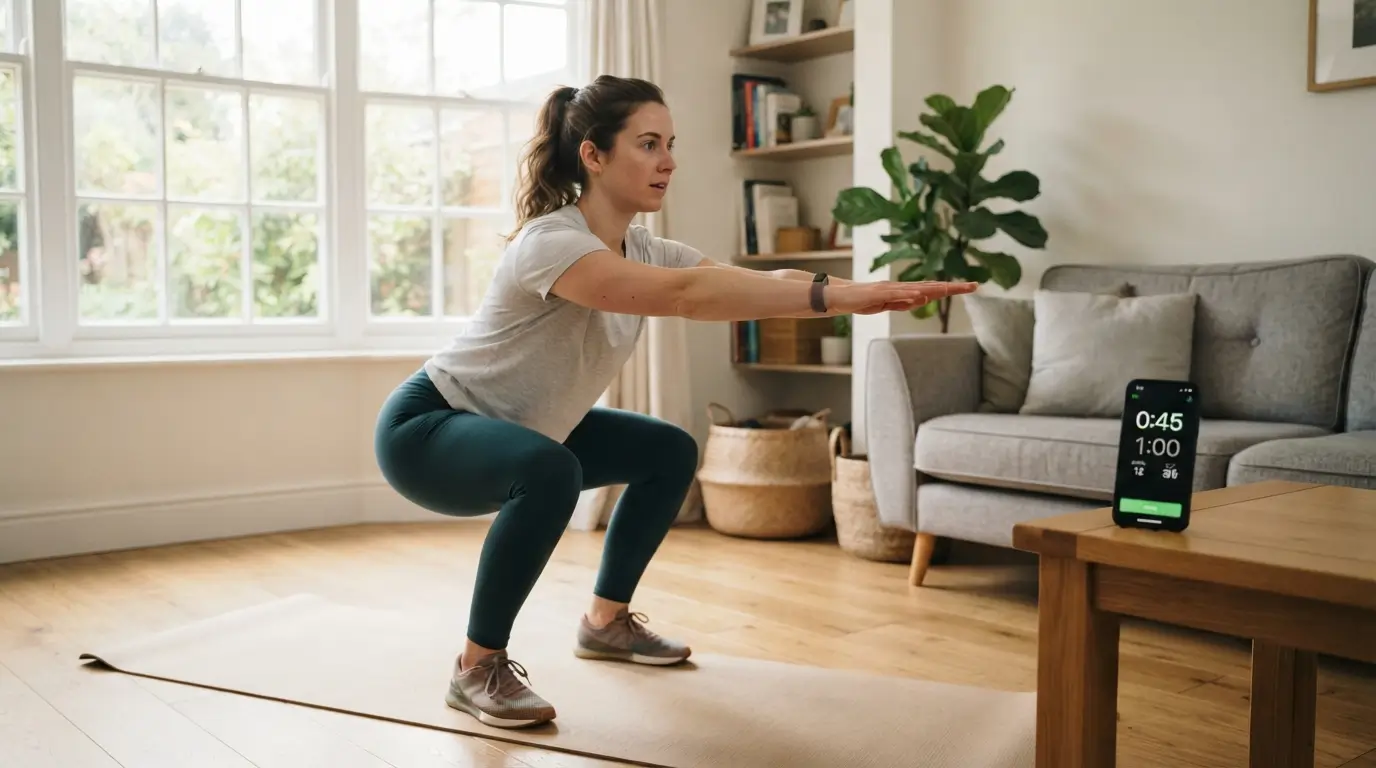
Set a timer on your phone for twenty minutes. Perform eight to ten controlled repetitions of your squat, move directly to your push variation, follow with your hinge, then your pull, and finish with a twenty-second core hold. Rest for ninety seconds between rounds to catch your breath.
Completing three total rounds delivers a solid training stimulus without wiping you out for the rest of the day. Using this full body circuit keeps your sessions efficient, engaging, and easy to remember without checking a complicated fitness app every two minutes. If you finish three rounds before your timer rings, stop there and call it a win.
A Ready-to-Use 20-Minute Living Room Template
Putting theory into practice works best with an exact sequence you can follow right now. You can run this exact sequence on Monday, Wednesday, and Friday afternoons right beside your couch.
Follow this beginner circuit for three rounds:
- 10 Chair Squats: Lower your hips until you lightly tap a sturdy chair, then stand tall while squeezing your glutes.
- 8 Incline Pushups: Place your hands on a sturdy kitchen counter and press up smoothly with a flat back.
- 10 Glute Bridges: Lie on your back, bend your knees, and drive your hips upward toward the ceiling.
- 10 Doorframe Rows: Grab the inside trim of an open doorway and pull your chest forward between your hands.
- 20 Second Deadbug: Lie flat on your back while alternating opposite arm and leg extensions with your core braced.
Rest two minutes between each completed round to sip water from your Hydro Flask and let your heart rate settle. This structured flow removes decision fatigue, which is the exact reason why knowing how to build a simple workout routine for beginners at home makes sticking to fitness so much easier. Consistency beats complexity, especially during your first month of training when building the habit matters most.
Schedule Your Sessions to Avoid Burnout
Treat your scheduled workouts like non-negotiable doctor appointments on your Google Calendar. Beginners often rely on spontaneous motivation, waiting until they feel energetic after work, which almost always ends in scrolling on the couch instead.
Pick three non-consecutive days, such as Monday, Wednesday, and Friday. Morning sessions work exceptionally well because unexpected schedule changes later in the day cannot derail your plans. If mornings sound awful, block out twenty minutes immediately after ending your workday before you sit down to relax. IMO, transitioning directly from work mode into your workout clothes prevents your brain from negotiating an excuse.
Prioritize active recovery on your off days by taking a brisk twenty-minute walk around your neighborhood. Gentle walking reduces muscle stiffness, boosts daily mood, and keeps your movement habit alive without adding physical stress to recovering joints.
Track Progress Without Stepping on the Scale
Relying solely on bathroom scales leads to unnecessary frustration because body weight fluctuates daily due to water retention, sodium intake, and digestion. Real progress shows up in your movement quality, strength gains, and daily energy levels long before the scale moves.
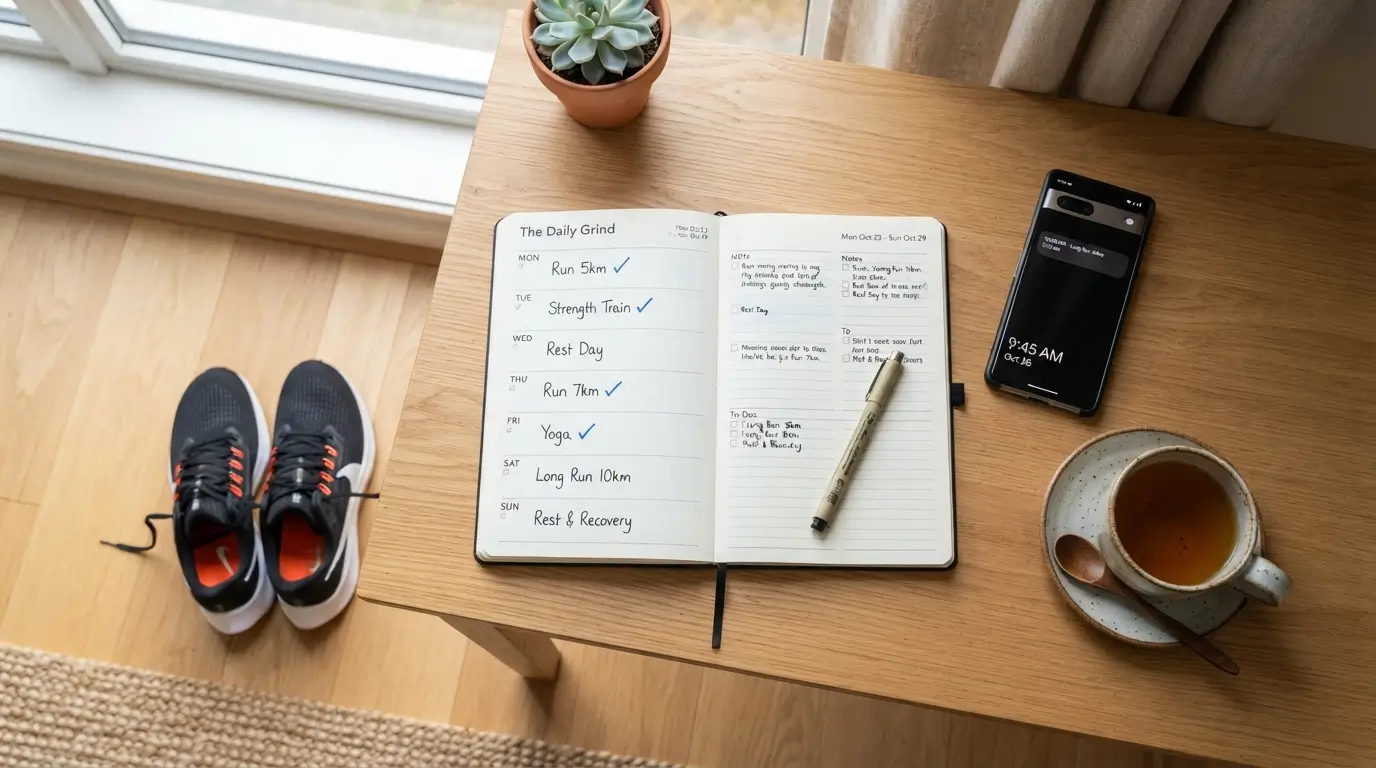
Keep a simple paper notebook or open the Notes app on your iPhone. Write down how many clean pushups you performed or how stable your squats felt compared to last week. When you master how to build a simple workout routine for beginners at home, you will notice everyday tasks feeling significantly lighter within three weeks.
Climbing two flights of stairs without gasping for breath and carrying heavy grocery bags in one trip are massive indicators of progressive overload in action. Celebrate these functional milestones because they prove your physical capacity is expanding far better than any digital scale can show.
Fix These Common Rookie Mistakes Early
Skipping a short warmup represents the most common trap for new exercisers eager to jump straight into hard work. Cold muscles and stiff tendons do not respond well to sudden bodyweight loads. Spend three minutes doing arm circles, high knees, and gentle torso twists before your first set to lubricate your joints and raise your core temperature.
Also Read; Top Exercise Programs for Stay at Home Parents 2026
Another massive error is rushing through repetitions to finish faster. Moving too quickly relies on momentum instead of muscle fiber recruitment, increasing your risk of tendon strain. Control the downward phase of every squat and pushup for two full seconds.
FYI, slowing down your tempo creates superior muscle tension while protecting your lower back and knees from sloppy form. Stop each set when you still have one or two clean reps left in the tank so you finish your session feeling energized rather than completely crushed.
Frequently Asked Questions
How many days a week should a beginner work out at home?
Three non-consecutive days per week is the sweet spot for beginners. Training every other day, like Monday, Wednesday, and Friday, gives your muscles forty-eight hours to repair and rebuild. This schedule builds physical momentum without overwhelming your calendar or leaving you too exhausted for everyday tasks.
Can I get real results if I learn how to build a simple workout routine for beginners at home without weights?
Yes, bodyweight exercises produce noticeable strength and endurance gains for beginners. Your body cannot tell the difference between a dumbbell and your own body mass acting against gravity. As movements feel easier, you simply adjust the angle, increase the repetitions, or slow down your tempo to challenge your muscles.
What should I do if my muscles feel sore the next day?
Mild muscle soreness is completely normal when starting a new routine. Drink plenty of water, do some light stretching, and go for a gentle fifteen-minute walk to increase blood flow to sore areas. If soreness feels sharp or limits your normal movement, take an extra rest day before working out.
How long should a beginner home workout session last?
An effective beginner home workout should last between twenty and thirty minutes, including your warmup. Longer workouts often lead to sloppy form and excessive fatigue for novices. Short, focused sessions allow you to maintain high movement quality and stay consistent week after week without burning out.
What basic equipment should I buy first for home training?
You do not need to buy anything immediately, but a non-slip exercise mat makes floor exercises much more comfortable. Once bodyweight movements feel easy, adding a set of inexpensive looped resistance bands or a pair of adjustable dumbbells gives you endless progression options without cluttering your living space.
Conclusion
Starting a sustainable fitness habit does not require a gym membership, hours of free time, or expensive gear. Pick your three workout days, stick to basic full-body movements, and focus on steady control. What room in your house will become your new workout spot this week?